It was small, rusty, unreliable and a bit ridiculous, but it opened up my life in so many ways.
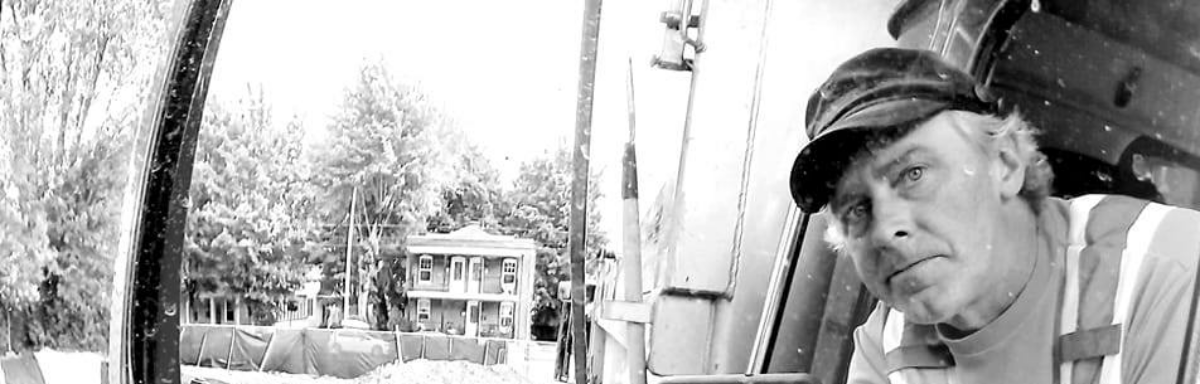
I was sitting in my garbage truck the other day at an intersection when I saw an approaching Tesla. The car came to the corner and executed a right turn. I found the fact the driver wasn’t touching the steering wheel rather disconcerting.
I am a driver. I was driving tractors before I could ride a bicycle, and as a farm kid cycled many, many miles to get pretty much anywhere. When I turned 16, I got my hands on a metallic brown 1978 Austin Mini.
Back in the days when Britain still made things, Sir Alec Issigonis, an engineer that believed mathematics to be “…the enemy of every truly creative man,” created the Austin Mini. In 1959, no one had ever seen anything like it before. Tiny, surprisingly sporty, it boasted front wheel drive and a transverse mounted engine. Much smaller than the modern Mini, it held to the road like it was on rails. Not the fastest in a straight line, the Mini Cooper S nevertheless won the Monte Carlo Rally in 1964, 1965 and 1967 because of its phenomenal handling. I didn’t do much racing, except against a buddy who drove a two door Ford Pinto station wagon. I could lose him in the curves every time. The Austin Mini would stay in production until 2000, with over 5 million of them being sold around the world.
By the time I got my mini in 1984, its best days were quickly disappearing in the rear-view mirror. The previous owner had beaten it up pretty badly, and the front bumper had once served on the front end of a Jeep. The ceiling was adorned with brown shag carpet, and before I took possession, he had removed six of the eight speakers and the radio. I couldn’t handle the shag, so the first thing I did when I got it was to rip it out. Bad move: he used contact cement, so I was left with a snot-like residue all over the ceiling.
It was also unreliable. The gas gauge didn’t work, the brakes were always a bit dodgy, and the lights would randomly stop working. It took all your senses to operate, as you watched the gauges that did work, listened for odd noises, and be on the alert for bad smells. If the smell wasn’t generated in the passenger seat, it could have been burning brakes, singed wiring, or the sweet smell of boiling antifreeze.
That learning process put me on good terms with my mechanic. Who would later become my boss, friend, mentor. A relationship that endures to this day.
It took all my attention to keep my Mini on the road. That’s the way it used to be for any motor vehicle. In my opinion that’s the way it should be still. Instead, modern automobile design is focused on separating the driver from the machine and losing a little something in the process.
Besides driving being the most dangerous thing most of us ever do, it’s also a place to enjoy certain freedoms. In a world where we are tied to subscriptions for our music, television, Internet, our ability to contact loved ones, or are bound to be in line for any number of things, the modern vehicle frees us to move about our environment, go where we want, when we want, how we want. It’s a rare moment of liberty in the day-to-day.
For a person who battles anxiety like I do, driving has been a coping mechanism. It’s an opportunity to have a moment where no one can ask anything of me. Don’t bother me, I’m driving. And in the days before cell phones, it was a time where one could, justifiably, be unreachable.
Here’s an exercise for you: Leave your phone on the counter for a few hours and go for a drive. See how that makes you feel. Feels pretty good, eh?
Instead, we live in a world where leaving your home without your cell phone is akin to going out with one shoe on. And then your car immediately pairs to your phone. In the pickup trucks at my work the screen tells me to connect my phone. Even if I don’t want to. You can read your text messages on the giant screen, plan your route, call someone.
But wait! Distracted driving is supposed to be a bad thing. Don’t let yourself be distracted by that big screen that tells you to connect your phone. And there’s so much sound deadening material that you can’t listen for odd noises, and the odd smells get removed by the cabin air filter. You’re going to the store in a space shuttle.
A space shuttle that tracks everything you do. Are your eyes open? Are you too close to the yellow line? Do you need to stop for a coffee? LEAVE ME ALONE FFS!
Increasingly cars, especially the ones with driving assists, have become more like appliances, the act of driving incidental. Like it is for those ride share people. If there’s a motorist who drives like they are lost, or don’t know the rules of the road, or simply don’t seem to care, chances are there’s a ride share logo on the door. For these people driving isn’t a moment of freedom, it’s an incidental act required to get somewhere. A necessary evil. They are missing out.
And now there’s the increasing use of Flock cameras. Look that up sometime. These cameras automatically log your licence plate, vehicle make, model. They even read your bumper stickers. And it all gets logged to a server farm somewhere for the authorities to look up whenever they feel like it. It’s common in the US, and apparently starting to make an appearance here in Canada. Echoes of 1984.
Freedom and a social life
For all its quirks (like the eight-track player I installed where you had to keep a hand on the tape to keep it playing at the right speed), I loved my Austin Mini. It gave me a social life. Not every teenager has a car, and parties could be hard to get to. It might not have been very impressive, but it got me and my friends to where the action was. I wasn’t cool, but I was becoming known.
The cool came later. When I got a motorcycle.
I think every new driver should start with a cheap, rundown car. No screens, no bells and whistles. No distractions. Analog driving. The inevitable breakdowns will teach them how vehicles work, and if they bump into something, they learn to avoid similar mistakes in the future. Put the phone in the glove box and go.
Because getting there should be half the fun.